The Eastern Synod Queer Committee is working to strengthen queer and 2SLGBTQIA+ welcome, affirmation, and belonging across the synod — in worship, congregational life, and public witness. We met for a working retreat in December 2025 and made strong progress on advancing the mandates for this triennium.
Valley of the Birdtail – By Andrew Stobo Sniderman and Douglas Sanderson (Amo Binashii)
For most Canadians, until very recently, the history of Canada’s relationships and interactions with Indigenous peoples has been obscured. Collectively, we need to remove the barriers to learning and hopefully understanding our combined but often not shared histories. I think the authors of this book have done a masterful job of making this history accessible by weaving into it the stories of two adjacent but very separated communities, families and individuals. This is not a typical historical textbook. As historical events are described they are given context because we learn of the effects on the lives of individuals and families in both communities – Waywaseecappo and Rossburn, one located on either side of the Birdtail River in Manitoba. While the authors share the story of these two adjacent communities, they are in many ways telling the story of Canada. We learn of government practices that were put in place to prevent Indigenous self sufficiency and economic success – not just in the past but continuing even today. The story of racism not just between the Indigenous and settler communities but also with new immigrants who were brought to Canada by the government. The impact of residential schools over generations is balanced with a story of success when new approaches to education for both communities were put in place. We hear individual stories of people who have overcome barriers and worked towards building a stronger future for both communities. There are stories that sadden but there are also stories of hope and resilience, and suggestions on how to continue this work into the future, making it better for everyone. I would highly recommend that everyone reads this book. We owe it to ourselves to learn more about the past because until we do, how can we go forward or change the future? I have confidence that future generations of Canadians will have that understanding because these stories are being told.
Respectfully submitted
Michele Altermann
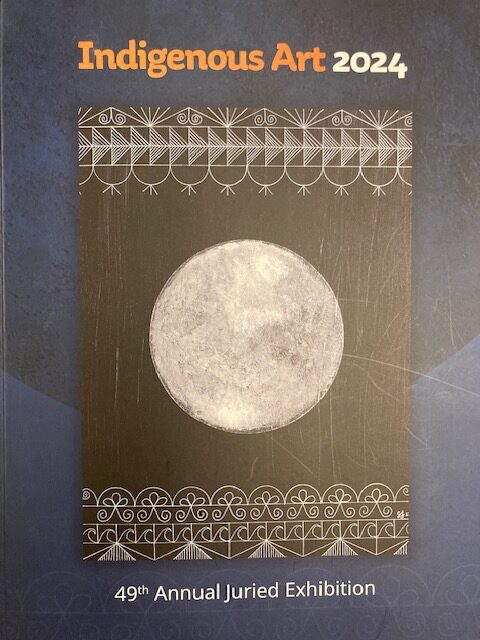
Indigenous Art 2024: 49th Annual Juried Exhibition Catalogue
The Woodland Cultural Center’s annual juried show brings together a wide array of Indigenous contemporary artists to share their stories, passions and talents. Offering the opportunity for
visitors to learn and appreciate Indigenous knowledge, while creating awareness of current social, and political movements and perspectives from various Indigenous communities from both sides of the border. Embracing values associated with the Good Mind: Ka’satsténshsera, emerging, mid-career and established artists have submitted work ranging from acrylic or oil paintings on canvas to sculpture, beading, photography, watercolour, stained glass, mixed media and pyrography on wood.
The 2024 exhibit explores themes such as relationship to place, protest, family, fashion, dance, law and the environment, reflecting the rich tapestry of Indigenous experiences.
In the catalogue, you have an opportunity to hear from curator Patricia Deadman, and jurors Rachelle Dickenson, David General, and Maxine Noel, all highly accomplished in their field.
Each of the art pieces is photographed, and a directory of all artists including biographies and illuminating descriptions of the artworks is provided.
By December of this year, the WCC’s gift shop hopes to offer the 50th Anniversary Catalogue: Indigenous Art 2025. I recommend making a trip to visit the Mohawk Institute in Brantford for a tour of the newly renovated interpretive centre, followed by a visit to the Woodland Cultural Centre, next door. If you can, attend in Summer/Fall to take in Indigenous Art 2026. There will be much to discover.
52 Ways to Reconcile
By David A. Robertson
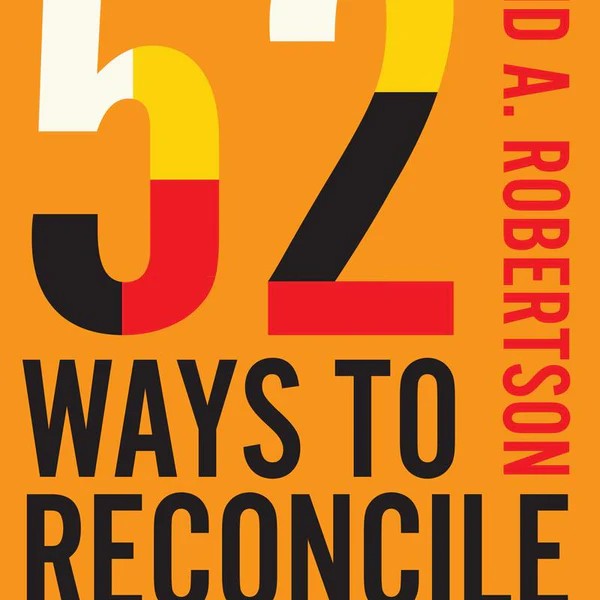
“For reconciliation to work, we need everybody, we need everybody, and we need everybody to be passionate about it” (pg. 2). David A. Robertson is an Indigenous author, a son, a father, a husband, a community member, public speaker, articulate, passionate and humorous. In the introduction to this witty and engaging book, he notes that reconciliation is the restoration of a relationship between equals that has become damaged. While history shows that the relationship in question was never equal, we should not get hung up on letting the past get in the way of building a new and better future. So, he suggests that we look at Reconciliation as an action. “Reconciliation is a community effort, and for it to work, it’s all hands on deck” (pg. 5). He feels that most Canadians want to act, to work on building that new future but often struggle with knowing what to do, or worrying about doing something wrong in the process, and so there is a danger of nothing being done at all. “That is how we will learn, though. Don’t forget that this is all still new, and because it is new, we are going to make mistakes along the way. All of us, as a community. The farther we get, the more we learn, the better we will do.” (pg. 6)
So to help us get going he has offered 52 suggestions. Each suggestion is offered gently, with thoughtfulness and humour – while generously sharing stories of this life, his family and his work as an author and public communicator. I bought the book on a Friday afternoon and finished it Sunday evening. I could not put it down! 52 suggestions to help us learn to walk together in a good way.
I suggest reading the entire book first, don’t look at it as a January to December road map where a different suggestion gets read each week for 52 weeks. That won’t work! Some suggestions are as simple as reading a book by an Indigenous author (yes! – I’ve done that and plan to do it often!) or watching a movie or TV show about an Indigenous story. These are things that can be done on a snowy day (as I watch the snow fall outside) but attending a pow wow or visiting a Cultural Centre needs planning. And this ticks off number 52 for me – “Share this Book!”
CLWR: Gifts From the Heart
| Give Gifts from the Heart this Christmas! Canadian Lutheran World Relief’s new Gifts from the Heart catalogue has something to inspire and delight anyone on your list this year. It’s full of meaningful, tangible gifts that will touch your loved ones and share God’s love with the world! In order to beat any delays due to possible postal strikes, we encourage everyone to get their gift orders in immediately and, if possible, to make their donations online at clwr.org/gfth or over the phone at 1-800-661-2597 (Mon-Fri 8:30am-4:00pm CST). And don’t forget to enter our colouring contest open to all ages, details can be found at clwr.org/colourcontest! To view the full catalogue of gifts CLICK HERE |
You Were Made for This World: Celebrated Indigenous Voices Speak to Young People
The Circle for Reconciliation and Justice would like to celebrate National Indigenous Education Month by sharing a review of a new Indigenous book each week, and encourage you and your congregation to get to know some new Indigenous authors and illustrators.
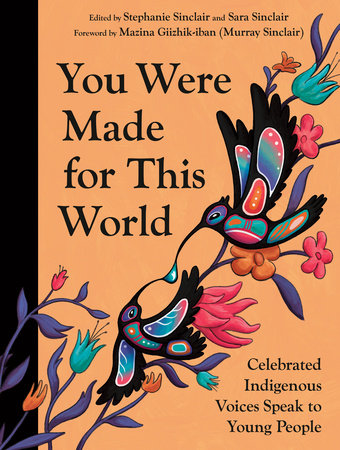
For me, this book begins with the beautiful cover illustration by my friend Mangeshig Pawis-Steckley. His mom, Leigh, is so proud of her son and his many gifts.
Editors Stefanie and Sara begin by introducing their German-Jewish grandmother and their Neyhiyaw-Anishinaabe grandfather. The book is an entry point to conversations they hope to have with their own children and they hope the words and images might also move us toward conversations about Indigenous history, strength and life, conversations many of us struggle to begin.
Murray Sinclair has written a beautiful and heartfelt forward about a story that touched him deeply – the story of the Ugly Duckling.
The book is structured as a medicine bundle, with each section representing a traditional medicine – water, tobacco, cedar, sweetgrass or sage.
In each section are uplifting, encouraging, nourishing stories written by Indigenous authors , paired with beautiful illustrations by Indigenous artists, demonstrating the gifts of collaboration and relationship.
“Bringing together forty Indigenous writers, artists, activists, athletes, scholars and thinkers from across Turtle Island, this joyful, proud and groundbreaking collection celebrates the potential of young people, who they are, and what they dream of.”
Reviewed by Beverly McNabb, October 2025.