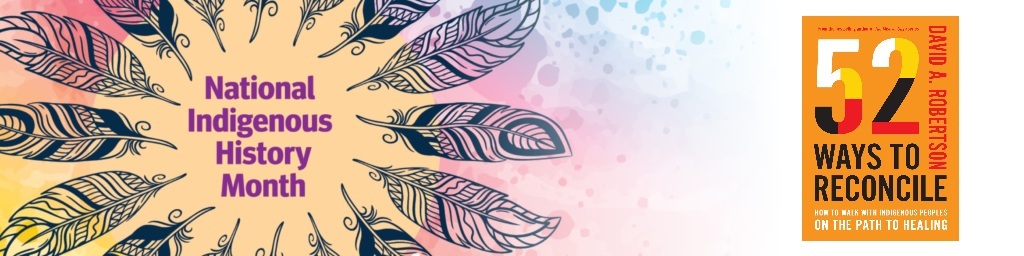
52 Ways to Reconcile
By David A Robertson
Reviewed by Michele Altermann
“For reconciliation to work, we need everybody, we need everybody, and we need everybody to be passionate about it” (pg. 2). David A. Robertson is an Indigenous author, a son, a father, a husband, a community member, public speaker, articulate, passionate and humorous. In the introduction to this witty and engaging book, he notes that reconciliation is the restoration of a relationship between equals that has become damaged. While history shows that the relationship in question was never equal, we should not get hung up on letting the past get in the way of building a new and better future. So, he suggests that we look at Reconciliation as an action. “Reconciliation is a community effort, and for it to work, it’s all hands on deck” (pg. 5). He feels that most Canadians want to act, to work on building that new future but often struggle with knowing what to do, or worrying about doing something wrong in the process, and so there is a danger of nothing being done at all. “That is how we will learn, though. Don’t forget that this is all still new, and because it is new, we are going to make mistakes along the way. All of us, as a community. The farther we get, the more we learn, the better we will do.” (pg. 6)
So, to help us get going he has offered 52 suggestions. Each suggestion is offered gently, with thoughtfulness and humour – while generously sharing stories of his life, his family and his work as an author and public communicator. I bought the book on a Friday afternoon and finished it Sunday evening. I could not put it down! 52 suggestions to help us learn to walk together in a good way.
I suggest reading the entire book first, don’t look at it as a January to December road map where a different suggestion gets read each week for 52 weeks. That won’t work! Some suggestions are as simple as reading a book by an Indigenous author (yes! – I’ve done that and plan to do it often!) or watching a movie or TV show about an Indigenous story. These are things that can be done on a snowy day but attending a pow wow or visiting a Cultural Centre needs planning. And this ticks off number 52 for me – “Share this Book!”
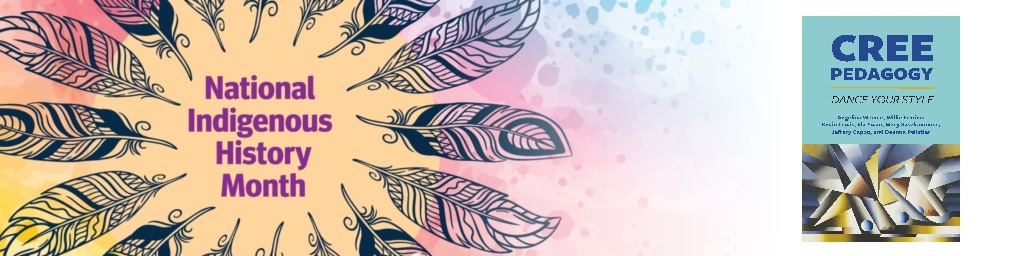
Cree Pedagogy: Dance Your Style by Angelina Weenie, Willie Ermine, Kevin Lewis, Ida Swan, Mary Sasakamoose, Jeffery Cappo, and Deanne Pelletier
https://canadianscholars.ca/book/dance-your-style/
Reviewed by Allen Jorgenson
You might imagine that this book is aimed at Cree educators but its intended audience is much wider. If you are interested in learning more about learning, or about a Cree worldview, this book is a must read. As someone who teaches for a living, I found my understanding of the classroom enlarged as the voices of the authors, the Elders, and their relations leapt off the page. I was especially moved by the way the land was portrayed as a significant and important teacher. I also really resonated with the principal metaphor of seeing teaching as a dance – inviting us to imagine that art, joy, the body, lament, and more are a part of both teaching and learning.
The book is divided into three sections: the first is entitled “Cree Pedagogy” and explores how Cree pedagogy is informed by language, land, myth and story, ceremony, and the history that shapes the Cree experience. Here we are invited to imagine that “the process of teaching begins by thinking clearly and in a spiritual manner.” (5)
Part two is entitled “askiy kiskinohmakewina: Earth Teachings” and digs deeply into the relationship between pedagogy and both the land and the spirituality informed by it. In this section we read that the land is “the key that turns the doors to our inwardness.” (69) Ermine understands that the Cree language is the portal to this world (63) and so nicely marries the image of the land and the Cree language as the key that opens the door. A great bonus of the book is that you are exposed to many Cree terms.
The third part is entitled “wāsēyāw: The Pathway” and explores both culture camps as modalities for a Cree pedagogy and the importance of maskikiw māhtāhitowin, or medicine thinking. This part of the book discusses the authors’ experiences with land-based education and culture camps. I especially liked the quotations from Elder Blackbird, who spoke of the need “to keep living Cree even when it is hard.” (131) This section included a number of extended quotations from Elders in Cree (along with translations) and reading these verbatim quotation felt a bit like sitting at the feet of beloved relation who is sharing their love and wisdom with you.
As a settler educator, I was so grateful for this book, which encouraged me to make my teaching local and land based, and so spiritually rich. As a settler learner, I was so grateful for opportunity to learn about learning from people Indigenous to this land, and from the land itself.
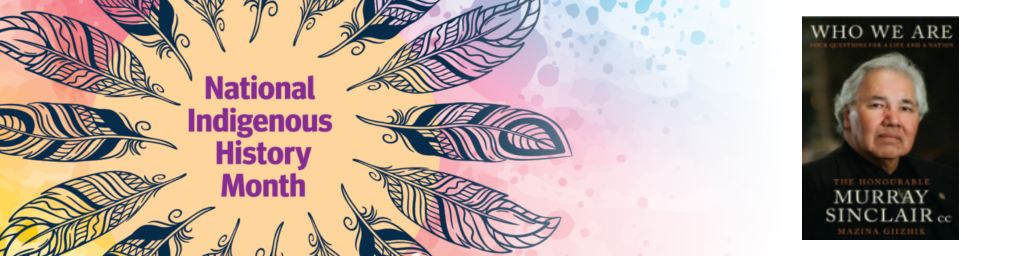
Who We Are by Murray Sinclair
Reviewed by Michele Altermann
There are many reviews available about this book and the many roles Senator Sinclair fulfilled during his lifetime, including being an Indigenous man, a husband, a parent, lawyer, judge, and finally Commissioner on The Truth and Reconciliation Commission of Canada.
I think when you write a book review it should reveal how you the readers, connected with the author/story. In this book writing is very engaging and draws you in. It teaches and offers insights. So, I will focus on what, for me, was a key learning. That stories matter, the people telling the stories matter, that stories teach us if we are willing to listen. Murray Sinclair was a person who listened, who didn’t just hear. When you listen to another’s story you give them respect and it opens a place where you can build relationship. Where there can be mutual respect, or as he states on age 211 “Reconciliation is about mutual respect”. He listened with respect.
From my perspective, our colonial society is very poor at listening because listening takes time. It takes time to build the space where mutual respect can grow and flourish. In our society we often ‘hear’, but we do not often take the time to listen. We are in too much of a rush; for example, we don’t have time to sit with our elders and listen to their stories. (Murray would sit with the elders and listen to their stories, before the actual Commission sessions, even if it meant starting ‘late’ because he valued the gift of their stories.) We don’t want to take the time to learn about the effect of trauma, we just want to know how to ‘fix’ it. And move on to the next item on the agenda. Building relationship takes time and some of that time is needed for just listening.
I think everyone would benefit from reading this book, which also contains many other stories from residential school survivors – since only the first half is Murray’s own story and the second half is a report from The Truth and Reconciliation Commission.
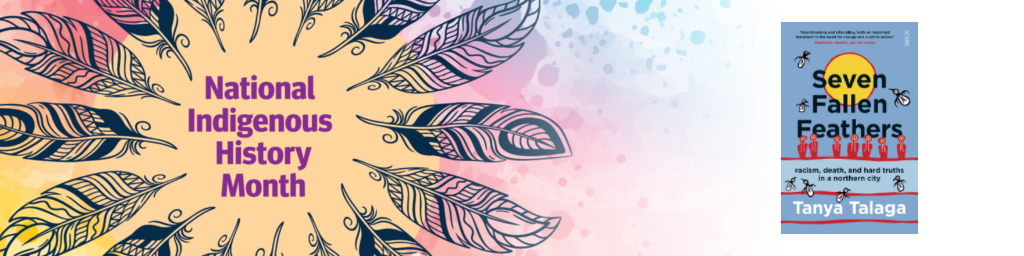
Seven Fallen Feathers by Tanya Talaga
This non-fiction work presents a comprehensive and deeply researched examination of the challenges faced by young Indigenous teens in the educational system, particularly in Thunder Bay. The book highlights the stark contrasts in family life on reserves and the limitations of local educational facilities, which often lack libraries, proper supplies, and a suitable curriculum. It explores the difficult decision these teens and their families must make between attending inadequate schools close to home or embarking on emotionally taxing journeys to “better” institutions far away, where they must board with strangers in a loud and indifferent world that can often feel unsafe and overwhelming.
As they navigate this complex landscape, many students find themselves disconnected from their traditions, land, and families, leading to feelings of being lost and dispirited. The research follows the educational pursuits of seven teenagers, ultimately revealing the tragic outcomes for those who did not survive the system from 2000 to 2011. Through her investigative journalism, Tanya offers a voice to the families impacted by these issues, fostering a sense of hope and highlighting the urgent need for change in the educational landscape for Indigenous youth.
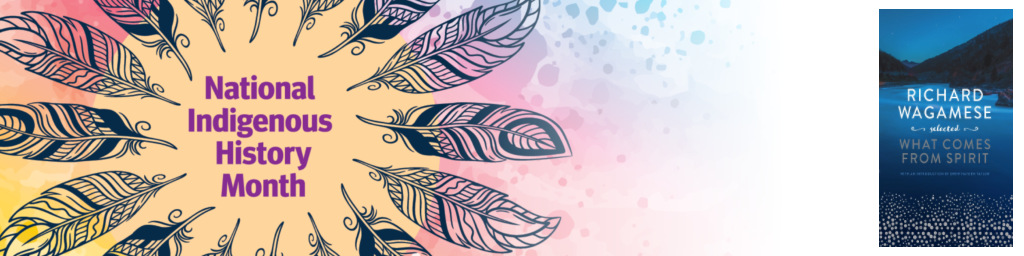
What Comes From Spirit by Richard Wagamese
Reviewed by Beverly McNabb
This small volume is a treasury of short stories, reflections and musings, culled from Richard’s social media accounts, blog posts and essay collections. Over 90 short meditations to be read slowly and savoured. Begin with Drew Hayden Taylor’s 4 page introduction, it is a letter of love not to be missed.
I discovered this book by accident; having thought I’d read all of Richard’s published work. Eager to enjoy the pages I soon discovered that it was a book to take time with and really soak up.
In classic Wagamese fashion, Richard shares stories from his childhood, and young adulthood, giving glimpses of the struggles he’s dealt with, yet many of the pieces flow with joy and wisdom, offering insights into the spiritual life of a conscientious seeker.
May this book nourish your soul, one morsel at a time.
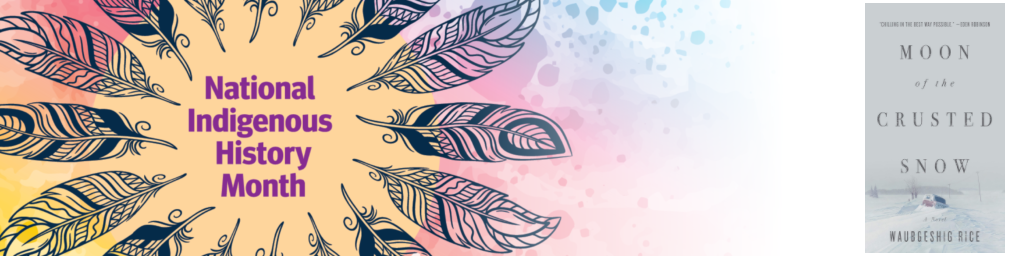
Moon of the Crusted Snow by Waubgeshig Rice
Reviewed by Michele Altermann
What would you do if there is suddenly no electricity, no communication, no supplies? This is the situation for a small Anishinaabe community in northern Ontario as winter begins. The community and leaders respond by rationing power and supplies, waiting to find out if things will return to normal. They don’t. The return of two college students indicates that there is total societal collapse to the south.
As the community adjusts to these changes, the arrival of refuges looking for food and shelter presents new and different challenges. As they deal with surviving over the next two years, the knowledge and teaching of the elders, and the skills people already have, help them adjust to the new reality. By the end of this book, they have decided to leave the place where they are currently living and return to a more traditional and sustainable way of life.
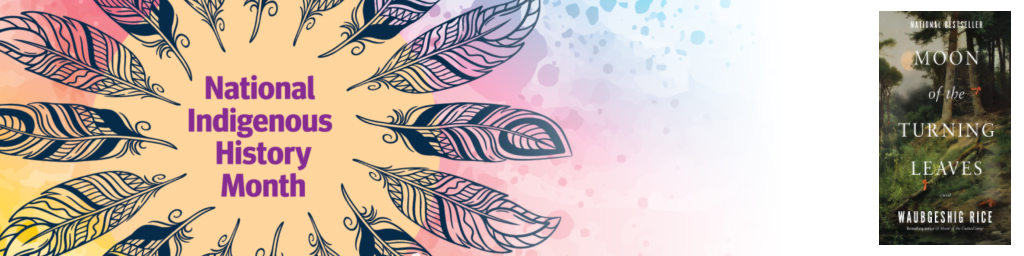
Moon of the Turning Leaves by Waubgeshig Rice
Reviewed by Michele Altermann
The second book picks up the story a decade later. The community has been doing well for the past ten years but resources are starting to become scarce and lingering questions about what happened and if there are any other people still out there remain. So a small group leaves the community to search for answers and possibly a better location for them to move to. The answers can be surprising.
Each book stands alone but together provide a picture of how a community works together to overcome huge challenges to their way of life. It is a story of respect for knowledge gained through generations and shared, resilience and hope, an affirmation that humanity can survive and even thrive through adversity.
I could not put either of these books down so carve out some personal time before you begin!
Daughters of the Deer by Danielle Daniel
Reviewed by Michele Altermann
Marie is an Algonkin woman and healer of the Deer Clan who has lost her husband and daughters to Iroquois raids. Her parents were pushed further and further north from the Ottawa River area because of raiding by the Iroquois and their English allies, and this is where they ended up. Now her small village, on a site near Trois-Rivières, is the location of a small but growing French settlement and church. Most of the warriors and hunters of the village have been lost to raids and the Sachem is worried about the survival of the remaining 100 or so people. To ensure their survival he convinces Marie to marry a French settler. The People need the protection of the French soldiers against the ongoing Iroquois raids. Marie dutifully takes off her deerskin tunic and dons a blue cloth dress to marry Pierre.
Danielle Daniel is a descendant of Marie, her twelfth generation grandmother. It is a fictional story based on family history and explores the challenges faced by an Indigenous woman and her half settler children in Quebec of the mid to late 1600s. It tells the story of children who try to fit into two different worlds and the prejudices that existed even after conversion to Catholicism and living in a mostly European fashion. When it turns out their daughter, Jeanne, is Two-Spirited it creates more problems for Jeanne, her family and the community. We see highlighted the long history of violence against Indigenous women and the struggles to maintain an identity that the growing newcomer society sees as primitive and disdainful. Written with care and respect, this wonderfully engaging and powerful story (I couldn’t put it down and finished it in two days!) pulls on your emotions even when you can anticipate where the story inevitably goes.
Go Show The World by Wab Kinew
Reviewed by Bev McNabb
I cannot recommend this book enough! Wab Kinew, musician, journalist, honorary witness for the TRC, now Manitoba NDP leader, wrote the words to this book as a rap song!
Go Show the World is geared to young people, but I found it quite enjoyable and very informative. Each page highlights a hero in a simple way, and there are short bios of each person at the back of the book. It’s a good introduction, and one can google for more depth afterwards.
Beautiful Illustrations fill the entire page and really help to contextualize each hero.
I was delighted that Wab featured Francis Pegahmagabow, a WW1 sniper who returned to his homelands ( Shawanaga FN and Wasauksing FN ) became Chief, and fought for the civil rights of his people, after serving our country so well. Parry Sound, between Shawanaga and Wasauksing, was my home for many years, and Francis is our local hero.
This book is a love letter to young people, uplifting and encouraging. Each section repeats these words: “We are people who matter. Yes, it’s true. Now go show the world what a person who matters can do.”
Starlight by Richard Wagamese
Reviewed by Bev McNabb
This final novel of Richard Wagamese is a rapturous and profoundly moving story of love, compassion, mercy and the consolations to be found in the natural world.
The story begins in the Nechako Valley, British Columbia in 1976. Frank Starlight has long settled into a quiet life working his remote fram, occasionally venturing into the unbroken country around his property to photograph the wild animals who thrive there. His contemplative existence comes to an abrupt end with the arrival of Emmy, a woman on the run who has committed a desperate act so she and her child can escape a life of abuse. Franke takes in Emmy and her daughter to help them get back on their feet, and gradually, this accidental family grows into a real one. But Emmy’s violent ex-boyfriend isn’t content to just let her go. He wants revenge and is determined to hunt her down.
Starlight was unfinished at the time of Richard’s death in March 2017, yet every page radiates with his masterful storytelling, intense humanism, and insights that are as hard-earned as they are beautiful. with astonishing scenes set in the rugged backcountry of the B.C. Interior, and characters whose scars cut deep even as their journey toward healing and forgiveness lifts us, Starlight is a magnificent last gift to readers from a writer who believed in the power of stories to save us.
Embers by Richard Wagamese
Reviewed by Rev Elaine Boone
This may be the perfect bedside table book if you want to begin or end your day in reflection, contemplation or inspiration. It is not a cover to cover read, but instead a dip into and out of a collection of short paragraphs on a wide range of teachings. Highly recommended!